
📋 Quick Summary
- Topic: Differences in presentation between children and adults and what behavioral signs parents should watch for.
- Key Takeaway: Early recognition and medical consultation are critical for the best clinical outcomes.
- Remember: Always consult a qualified healthcare professional if you have concerns.
Leukemia Symptoms: How Children and Adults Differ
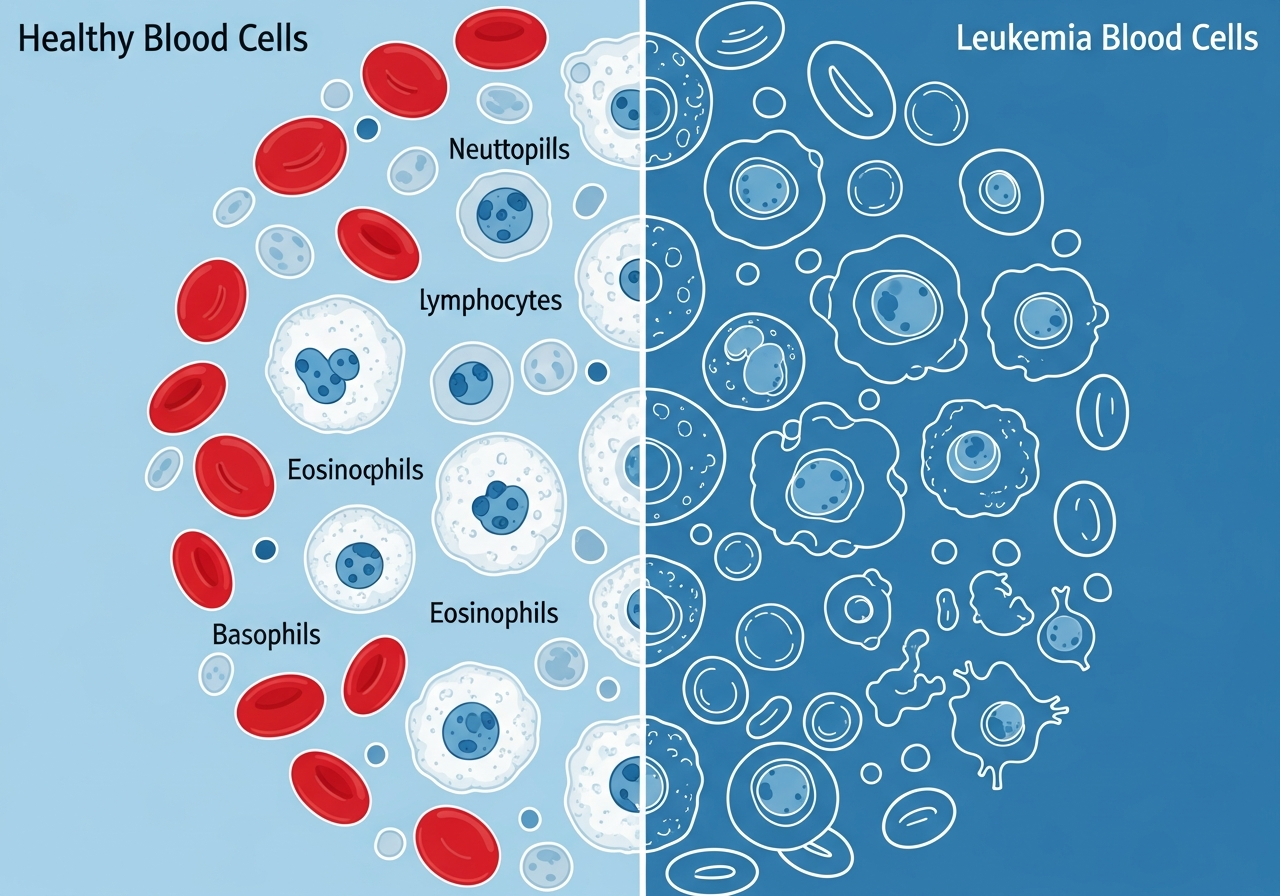
Leukemia is not one disease but a broad family of blood cancers, and its presentation varies significantly between children and adults — not only in symptom pattern but in the predominant leukemia type, the urgency of presentation, and the expected clinical outcomes. Understanding these age-related differences helps parents, adults, and caregivers recognize which symptoms warrant prompt evaluation and why the clinical approach differs at different life stages.
In children, Acute Lymphoblastic Leukemia (ALL) dominates — accounting for approximately 75–80% of all pediatric leukemia diagnoses. In adults, the distribution is more varied: AML is the most common acute leukemia of adulthood, while CLL is the most common leukemia overall in adults, primarily affecting those over 60. These biological differences drive the differences in symptom presentation, treatment, and prognosis across age groups.
Leukemia in Children: The Predominance of ALL
Leukemia is the most common cancer in children, accounting for approximately 30% of all childhood cancers. The good news is that childhood leukemia — particularly ALL — has dramatically improving outcomes. The five-year survival rate for childhood ALL now exceeds 90% in most high-income countries, a remarkable achievement attributable to intensive multi-agent chemotherapy regimens developed through decades of clinical trials.
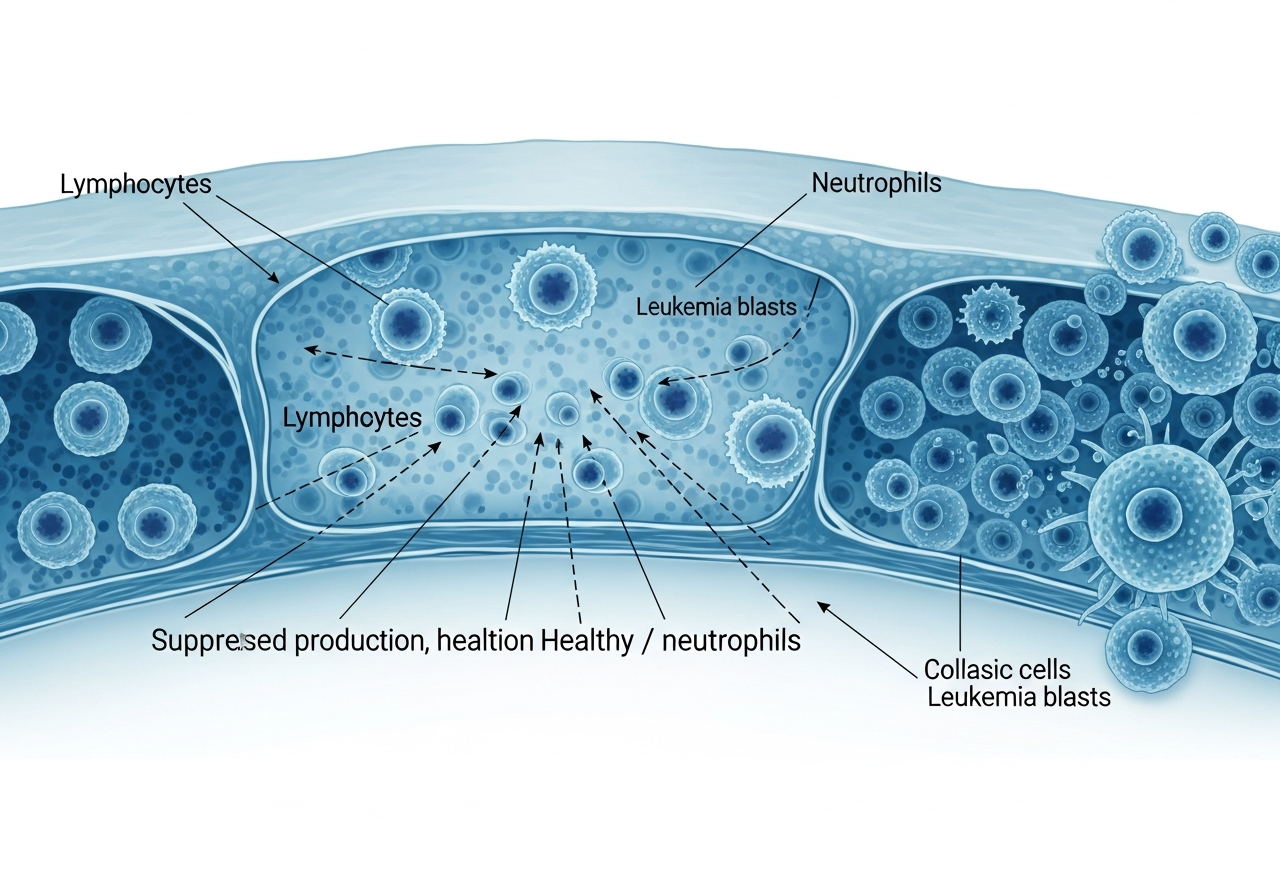
ALL in children most commonly presents between ages 2 and 5, with a secondary peak in adolescence. It originates in B-lymphocyte precursors in the vast majority of cases. The malignant lymphoblasts rapidly crowd the bone marrow, suppressing the production of all normal blood cells and producing the classic symptom triad of anemia, thrombocytopenia, and neutropenia.
Symptoms That Are Distinctive in Children
Bone and Joint Pain
Bone and joint pain is far more prominent in childhood ALL than in adult leukemia. As leukemia cells expand within the bone marrow, they generate pressure that stretches the periosteum (the pain-sensitive membrane covering bones), producing a deep, aching pain that may be severe enough to cause limping or complete refusal to walk.
In younger children who cannot articulate pain clearly, this presents as behavioral changes: irritability, refusing to stand or walk (particularly after a night's rest when marrow pressure is highest), favoring one leg, or asking to be carried more than usual. Parents often initially attribute this to an injury or to growing pains, delaying the diagnosis by days to weeks. Any unexplained limping or refusal to bear weight in a child should prompt medical evaluation, particularly if accompanied by unusual fatigue or unexplained bruising.
The pain in childhood ALL typically affects multiple sites — particularly the long bones of the legs and arms, the spine, and the joints — and may be migratory (shifting from site to site). It can closely mimic juvenile idiopathic arthritis or "growing pains," leading to misdiagnosis and treatment delay.
Fever Without Obvious Source
Recurrent or persistent fever without an identifiable source is one of the most common presentations of childhood ALL. Parents and pediatricians frequently attribute initial episodes to common viral infections, particularly in young children who are expected to experience frequent respiratory illnesses. However, fever that persists beyond 7–10 days without a clear cause, or that recurs shortly after resolution, warrants a blood count.
Lymphadenopathy and Splenomegaly
Enlarged lymph nodes — particularly in the neck — are common in children and are almost always benign, caused by frequent upper respiratory infections. In childhood ALL, lymph nodes are typically more widespread (multiple regions), non-tender, and firm — in contrast to the tender, soft nodes of infection. The spleen is palpably enlarged in approximately 50–60% of children with ALL at diagnosis.
Petechiae and Bruising
Petechiae — tiny red pinpoint dots from microbleeds under the skin — are visible on the limbs and trunk and are particularly alarming to parents who have not previously encountered them. Combined with unusual bruising in non-trauma locations, these findings should prompt immediate blood work.
Pallor
Parents frequently describe noticing that their child "looked white" or "pale" in the weeks before diagnosis. Anemia-driven pallor in children is best assessed by looking at the conjunctiva, nail beds, and palms, and comparing to recent photos to judge whether a change has occurred.
CNS Symptoms
A small percentage of children with ALL — more common in T-cell ALL and those with high white blood cell counts at diagnosis — have central nervous system (CNS) involvement at presentation. This may produce headaches, vomiting (particularly in the morning), visual changes, or rarely facial droop from cranial nerve involvement. CNS involvement requires specific treatment, including CNS-directed therapy (intrathecal chemotherapy).
Leukemia in Adults: A More Varied Landscape
In adults, the leukemia landscape is considerably more complex. While ALL can occur in adults, its biology is generally more aggressive and outcomes less favorable than in children — largely because adult ALL is more likely to carry adverse molecular markers such as the Philadelphia chromosome (BCR-ABL fusion gene). AML is the most common acute leukemia of adulthood and carries a more guarded prognosis, particularly in patients over 60.
The chronic leukemias — CLL and CML — are almost exclusively adult diseases, typically diagnosed in patients over 50 and 40, respectively. These diseases may have no symptoms for years and can be discovered only through routine blood testing, producing a markedly different diagnostic experience from the acute presentations common in children.
How Leukemia Symptoms Present Differently in Adults
Adult leukemia presentations depend heavily on the specific type:
AML in Adults: Rapid and Severe
AML in adults often presents rapidly — over days to weeks — with profound fatigue, bruising, bleeding gums, frequent infections, and fever. Breathlessness from severe anemia may develop quickly. In AML, gingival (gum) infiltration — where leukemia cells invade the gums, causing swelling and bleeding — is a distinctive finding not seen in other leukemia types. Skin involvement (leukemia cutis or chloroma) is also more common in AML monocytic subtypes.
CLL in Adults: Often Asymptomatic
CLL is frequently discovered incidentally when a routine blood test reveals a markedly elevated lymphocyte count. At early stages, many CLL patients have no symptoms. As the disease progresses, lymphadenopathy, fatigue, and increased susceptibility to infections develop. Night sweats and weight loss (B symptoms) indicate more advanced disease. The absence of dramatic acute symptoms can lead CLL patients — and their physicians — to underestimate the disease's seriousness.
CML in Adults: Subtle Onset
CML is often discovered incidentally. When symptomatic, patients report fatigue, left-sided abdominal fullness from spleen enlargement, and occasionally night sweats and weight loss. The accelerated and blast-phase transitions of CML produce more acute, severe symptoms that resemble AML.
Side-by-Side Symptom Comparison
| Symptom | Children (ALL-dominant) | Adults (AML / CLL / CML) |
|---|---|---|
| Bone/joint pain | Very common; may cause refusal to walk | Less prominent (present in AML, ALL) |
| Fatigue | Extreme lethargy; behavioral change | Profound; often attributed to aging |
| Discovery method | Acute symptoms prompt urgent evaluation | Often incidental bloodwork (CLL/CML) |
| CNS symptoms | More common (ALL, high WBC) | Less common at diagnosis |
| Gum infiltration | Rare | AML monocytic subtypes (FAB M4/M5) |
| Night sweats | Moderate | Common (CLL advanced; AML; CML) |
| Onset speed | Usually acute (days to weeks in ALL) | Acute (AML) or insidious (CLL/CML) |
Diagnostic Approach by Age
The fundamental diagnostic workup — CBC with differential followed by bone marrow biopsy — is the same across age groups, but the pre-test probability and urgency differ. In a child with bone pain, petechiae, and pallor, leukemia is near the top of the differential and evaluation is urgent. In an older adult with mild fatigue and a slightly elevated lymphocyte count, CLL is suspected but evaluation may be scheduled rather than emergent.
Molecular and cytogenetic testing is critical in both age groups but has different implications. In children, the BCR-ABL fusion gene (Philadelphia chromosome) — present in approximately 3–5% of childhood ALL — indicates high-risk disease requiring targeted therapy addition. In adults, this same mutation is present in up to 25–30% of adult ALL cases, driving the routine use of TKIs like dasatinib alongside chemotherapy for all adults with ALL.
Treatment Differences by Age
Childhood leukemia treatment is intensive but generally better tolerated due to children's physiological resilience and higher organ reserve. Adult leukemia treatment must be carefully calibrated to organ function, comorbidities, and patient fitness — older adults often cannot safely receive the most intensive regimens used in younger patients.
Pediatric leukemia care is delivered at specialized children's cancer centers with multidisciplinary teams experienced in managing the unique needs of children during intensive treatment, including neurocognitive monitoring, growth effects, and psychological support for both child and family.
Prognosis Differences Between Children and Adults
The prognosis difference between childhood and adult leukemia is striking. Childhood ALL has a cure rate exceeding 90% in most developed countries. Adult ALL has a five-year survival rate of approximately 35–50%, improving with targeted therapies for specific subtypes. AML overall has a five-year survival of approximately 29%, though this varies dramatically by molecular subtype and age. CLL is typically not curable but is manageable as a chronic condition for many patients, with median survival now exceeding 10 years with modern therapies.
Age-Specific Patient Considerations
For adults: Adults who notice any cluster of unexplained symptoms — particularly fatigue, bruising, frequent infections, or night sweats — should not attribute these solely to aging without a medical evaluation. A blood count is a simple and definitive first step. Older adults are at highest risk for AML, CLL, and CML, and early detection remains the best way to preserve treatment options.
For pediatric patients: Children undergoing leukemia treatment require specialized emotional, educational, and developmental support in addition to medical care. School re-entry planning, neuropsychological assessment, and long-term survivorship follow-up are standard components of comprehensive pediatric leukemia care.
Caregiver and Parent Guidance
Parents of children with leukemia face unique challenges: managing a seriously ill child while supporting siblings, maintaining work responsibilities, and navigating a complex medical system. Connecting with pediatric oncology social workers and family support organizations — such as the Leukemia & Lymphoma Society (LLS) and Children's Cancer Fund — provides essential practical and emotional resources.
Adult caregivers supporting a family member with leukemia should be aware of the age-specific disease characteristics, help monitor for symptom changes, and ensure the patient attends all scheduled medical appointments. Caregiver burnout is common and must be proactively addressed through respite care and peer support.
When to Seek Urgent Medical Evaluation
For children: Seek urgent medical evaluation for unexplained limping or refusal to walk, petechiae (pinpoint red dots), pallor, unexplained fever lasting more than 7–10 days, or any combination of fatigue + bruising + swollen glands.
For adults: Seek medical evaluation for unexplained fatigue lasting more than 2 weeks, unusual or disproportionate bruising, recurrent or unusually severe infections, painless lymph node enlargement lasting more than 3 weeks, or unexplained weight loss.
Both age groups — emergency evaluation for: Uncontrolled bleeding, fever above 101°F in any known leukemia patient, sudden breathlessness at rest, confusion, or severe weakness.
🚨 When Children Need Emergency Evaluation
- Widespread petechiae or rapid onset of large bruises
- Refusal to walk or bear weight with pallor and fever
- Severe headache, vomiting, or visual changes (possible CNS involvement)
- Fever above 101°F in a child already diagnosed with leukemia
💬 Questions to Ask Your Healthcare Team
- Given my (or my child's) age, what specific leukemia type is most likely based on the test results?
- How does age affect treatment choices and which protocols are appropriate?
- What are the expected long-term effects of treatment at this age?
- Are there specialized pediatric or adult leukemia centers where we should be treated?
- What support services are available for families of pediatric leukemia patients?
- How does prognosis differ for this leukemia type at my (or my child's) age?
This content is for informational and educational purposes only. It is not a substitute for professional medical advice, diagnosis, or treatment. Always consult your physician or a qualified healthcare provider with any questions about a medical condition. Never disregard professional medical advice or delay seeking it because of information you have read on this website. Read our full disclaimer.
Frequently Asked Questions
Children may show extreme irritability, refusal to walk due to bone pain, and recurrent fevers, in addition to the standard fatigue and bruising.
Yes — childhood ALL has a cure rate exceeding 90% with modern therapy, significantly higher than adult leukemia.
Persistent lethargy, unexplained limping, widespread bruising, and fevers that do not resolve with standard care.