
📋 Quick Summary
- Topic: Splenomegaly, hepatomegaly, abdominal pain and fullness, and when to seek urgent evaluation.
- Key Takeaway: Early recognition and medical consultation are critical for the best clinical outcomes.
- Remember: Always consult a qualified healthcare professional if you have concerns.
Abdominal Discomfort and Leukemia
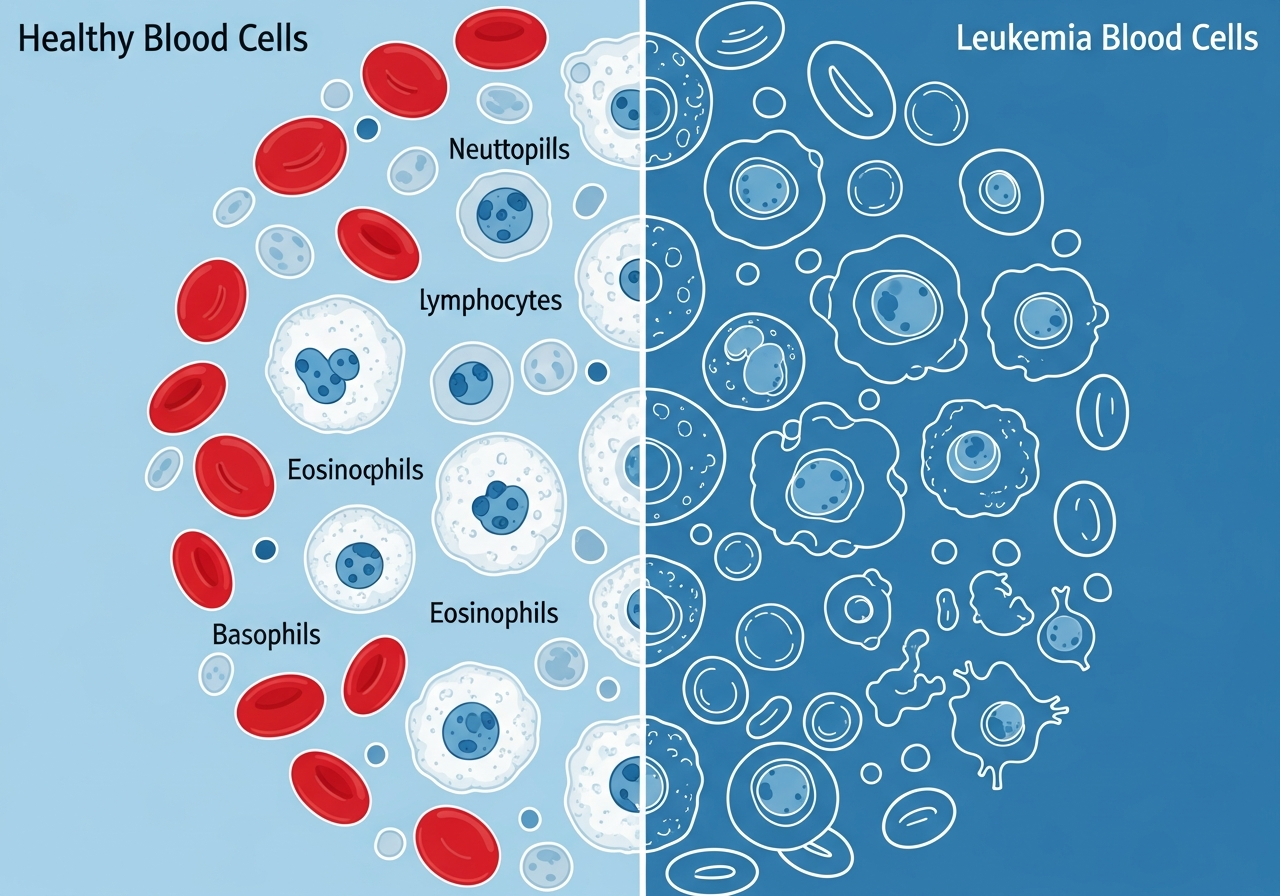
Abdominal discomfort — including fullness, pain, early satiety (feeling full quickly), and a palpable mass or swelling — is a clinically significant symptom in several leukemia types. While abdominal pain is a common complaint with many benign causes, the specific pattern of leukemia-related abdominal symptoms reflects the infiltration of abdominal organs — particularly the spleen and liver — by leukemia cells.
The spleen and liver are two of the most common sites of extramedullary hematopoiesis (blood cell production outside the bone marrow) in normal development, and they retain this capacity in adulthood. Leukemia cells exploit this, accumulating in these organs and causing them to enlarge significantly. Splenomegaly (enlarged spleen) and hepatomegaly (enlarged liver), collectively called hepatosplenomegaly, are physical examination findings that directly point toward a systemic hematologic process and warrant urgent evaluation.
Understanding why these organs enlarge in leukemia, what symptoms they produce, and when abdominal symptoms represent an emergency helps patients and families recognize a critical warning sign that can distinguish leukemia from more benign causes of abdominal discomfort.
Causes of Abdominal Symptoms in Leukemia
Organ Infiltration by Leukemia Cells
Leukemia cells — particularly lymphocytic leukemia cells — express surface receptors (chemokine receptors, adhesion molecules) that direct them to home to the spleen and liver. As these cells accumulate in organ tissue, they displace and compress normal architecture, impairing organ function and dramatically increasing organ size. In CML and CLL, the spleen can become massively enlarged — sometimes extending down to the pelvis and visible on physical inspection as a left abdominal fullness.
Extramedullary Hematopoiesis
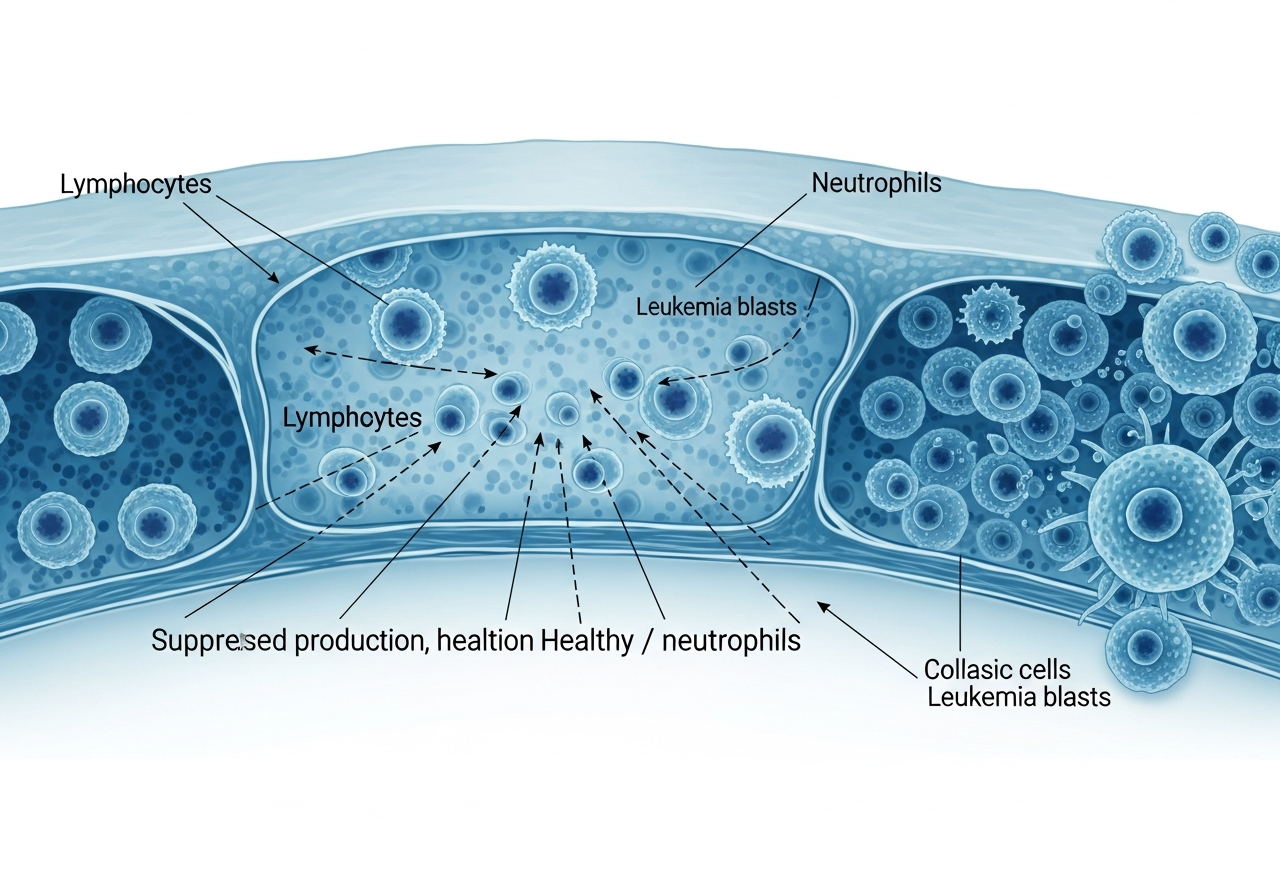
When the bone marrow is overwhelmed by leukemia cells and cannot perform normal hematopoiesis, the spleen and liver attempt to compensate by reverting to their fetal hematopoietic role. This extramedullary hematopoiesis further contributes to organ enlargement beyond what infiltration alone would produce.
Lymph Node Enlargement
In lymphocytic leukemias, abdominal and retroperitoneal lymph nodes may enlarge substantially. Large mesenteric or retroperitoneal lymph node masses can cause compression symptoms — pain, altered bowel habits, or a palpable abdominal mass.
Treatment-Related Abdominal Complications
Several treatment-related complications produce abdominal symptoms in leukemia patients:
- Typhlitis (neutropenic enterocolitis): An acute inflammation of the cecum and terminal ileum in severely neutropenic patients — can cause right lower quadrant abdominal pain, fever, and diarrhea. A medical emergency requiring urgent intervention.
- Hepatic sinusoidal obstruction syndrome (SOS/VOD): A serious complication of high-dose conditioning chemotherapy before stem cell transplantation, causing liver swelling, right upper quadrant pain, and ascites.
- Steroid-related gastritis and peptic ulcer: Corticosteroids used in leukemia treatment increase gastric acid production and can cause gastric pain, nausea, and peptic ulceration.
Splenomegaly in Leukemia: Clinical Significance
The spleen is the abdominal organ most commonly and dramatically affected in leukemia. Normally about the size and weight of a fist (approximately 150–200 grams), the leukemic spleen can grow to weigh several kilograms. Splenomegaly is particularly characteristic of:
- CML: Massive splenomegaly is one of the hallmark findings of CML, often the first sign. The spleen may extend from the left upper quadrant to the left iliac fossa.
- CLL: Splenomegaly occurs in moderate to advanced disease, contributing to abdominal fullness, early satiety, and left-sided abdominal discomfort.
- Hairy Cell Leukemia: A rare CLL-related disease characterized by massive splenomegaly often without prominent lymphadenopathy.
- CMML: Splenomegaly is common, reflecting both organ infiltration and extramedullary hematopoiesis.
Symptoms of Splenomegaly
- Left upper quadrant pain or discomfort: A dull, persistent ache or sense of pressure in the left side of the abdomen, just below the ribs. May radiate to the left shoulder (referred pain from the diaphragm).
- Early satiety: The enlarged spleen compresses the stomach, reducing its capacity. Patients feel uncomfortably full after eating very small amounts, leading to inadvertent weight loss.
- Abdominal distension: A visually enlarged left or generalized abdomen, sometimes palpable by the patient themselves as a firm mass under the left rib cage.
- Left shoulder pain: Referred pain from the diaphragm when the spleen is very large — can be mistaken for cardiac or pulmonary symptoms.
Splenic Infarction and Rupture: Rare Emergencies
When the spleen becomes massively enlarged, the blood supply to portions of the spleen may be insufficient, causing splenic infarction — death of splenic tissue from ischemia. This produces sudden, severe left-sided abdominal pain, often radiating to the back or left shoulder. More rarely, an enlarged spleen may rupture spontaneously or from minimal trauma, causing potentially life-threatening internal hemorrhage. Sudden, severe left abdominal pain in a leukemia patient with known splenomegaly is a medical emergency.
Hepatomegaly in Leukemia
Hepatomegaly — enlargement of the liver — occurs in many leukemia types as leukemia cells infiltrate the liver parenchyma and portal tracts. It is typically less dramatic than splenomegaly but contributes to right upper quadrant discomfort, a sense of abdominal fullness on the right side, and occasionally mild jaundice if bile duct compression occurs.
Liver function tests (LFTs) may be mildly abnormal when significant hepatomegaly is present, reflecting the disturbance of normal liver architecture by infiltrating cells. In CLL, hepatomegaly often accompanies splenomegaly and indicates more advanced systemic disease involvement.
Clinical Presentation: What Patients Experience
The abdominal symptoms of leukemia are often subtle and insidious in onset — patients may not recognize the gradual enlargement of their spleen or liver until it is quite advanced. Common experiences include:
- A progressive sense of abdominal "fullness" or "bloating" that is constant rather than related to meals
- Needing to eat much smaller portions before feeling uncomfortably full
- A palpable "lump" or fullness under the left rib cage that the patient notices when lying flat
- Dull, persistent discomfort in the left side of the abdomen
- Unintentional weight loss related to reduced food intake from early satiety
- Occasional left shoulder or back pain radiating from diaphragmatic irritation by the enlarged spleen
Diagnostic Evaluation of Abdominal Symptoms in Leukemia
When abdominal discomfort raises concern for leukemia, the evaluation includes:
- Physical examination: An experienced clinician can often identify hepatomegaly and splenomegaly by palpating the abdomen. Spleen size is measured clinically in centimeters below the left costal margin.
- CBC with differential: The cornerstone of leukemia evaluation. In CML, a dramatically elevated white cell count with a full spectrum of myeloid cells is diagnostic. In CLL, markedly elevated mature lymphocytes are characteristic. Learn more about blood tests in leukemia.
- Liver function tests: Assesses for hepatocellular damage and bile duct obstruction from liver infiltration.
- Abdominal ultrasound: A rapid, non-invasive method to quantify spleen and liver size and identify abdominal lymphadenopathy.
- CT scan (abdomen/pelvis): Provides detailed anatomical information including organ dimensions, nodal involvement, and vascular anatomy. Standard staging imaging for most leukemia types with systemic involvement.
- Bone marrow biopsy: Confirms the specific leukemia diagnosis and guides treatment selection. What to expect from bone marrow biopsy.
How Treatment Affects Abdominal Symptoms
In CML, the introduction of tyrosine kinase inhibitors (imatinib, dasatinib, nilotinib) has been transformative. Splenomegaly — often massive at diagnosis — typically begins to resolve within weeks of starting TKI therapy, with dramatic improvement in abdominal symptoms and appetite. This rapid organ response is one of the most gratifying early treatment milestones for both patient and clinician.
In CLL, splenomegaly may require specific treatment beyond general anti-leukemia therapy in some cases. Splenectomy (surgical removal of the spleen) may be considered for massive symptomatic splenomegaly that does not respond adequately to systemic treatment. Splenic irradiation is occasionally used in patients who are not surgical candidates.
For typhlitis — the neutropenic enterocolitis complication — treatment involves bowel rest, broad-spectrum antibiotics, and supportive care. Surgical intervention is needed in severe cases with perforation.
Prognosis and Organ Involvement
Hepatosplenomegaly generally indicates a higher disease burden and may be associated with a higher disease stage. In CLL, both spleen and liver involvement indicate advanced Rai or Binet stage, which influences the timing of treatment initiation. In CML, massive splenomegaly at diagnosis correlates with a higher burden of disease but does not necessarily predict poor response to TKI therapy. With effective treatment, organ enlargement resolves in most patients.
Patient Considerations
Patients with known splenomegaly should be counseled on avoidance of activities that risk splenic trauma — particularly contact sports, high-impact activities, or any situation involving abdominal impact. The risk of splenic rupture, while low, is elevated in massively enlarged spleens and can be catastrophic. Wearing protective gear during any potentially high-impact activity is advisable.
Patients experiencing early satiety should adopt the small, frequent meal approach detailed in our article on managing weight loss in leukemia. Calorie-dense, protein-rich foods in small volumes help maintain nutrition when meal size is severely limited by gastric compression.
Caregiver Guidance
Caregivers should be aware of the signs of splenic infarction or rupture — sudden, severe left-sided abdominal pain in a leukemia patient with known splenomegaly requires immediate emergency evaluation. They should also monitor for signs of nutritional decline related to early satiety and encourage small, frequent nutritious meals. Reporting noticeable increases in abdominal girth, visible distension, or escalating abdominal discomfort to the medical team provides valuable information about disease progression or treatment response.
When to Seek Medical Attention
- Gradual abdominal fullness and early satiety with other leukemia symptoms — prompt (non-emergency) medical evaluation including blood count
- A palpable mass in the left upper abdomen — evaluation within days, not weeks
- Sudden, severe left-sided abdominal pain or abdominal pain that worsens rapidly — possible splenic infarction or rupture — emergency
- Right upper quadrant pain with jaundice (yellow skin or eyes) — possible liver involvement with bile duct obstruction
- In any neutropenic leukemia patient: right lower quadrant pain with fever — possible typhlitis — emergency
🚨 Abdominal Emergencies in Leukemia
- Sudden severe left-sided pain with known enlarged spleen — possible splenic rupture
- Right lower quadrant pain with fever in a neutropenic patient — possible typhlitis
- Abdominal pain with signs of internal bleeding (rapid pulse, low blood pressure, pallor)
💬 Questions to Ask Your Healthcare Team
- How enlarged is my spleen and liver, and what does this indicate about disease stage?
- Are there activities I should avoid because of my enlarged spleen?
- Will my abdominal symptoms improve with my current treatment plan?
- Should I be assessed for a splenectomy if my spleen remains very enlarged?
- What abdominal symptoms should prompt an emergency evaluation?
- How can I maintain adequate nutrition given the early satiety from my enlarged spleen?
This content is for informational and educational purposes only. It is not a substitute for professional medical advice, diagnosis, or treatment. Always consult your physician or a qualified healthcare provider with any questions about a medical condition. Never disregard professional medical advice or delay seeking it because of information you have read on this website. Read our full disclaimer.
Frequently Asked Questions
Leukemia cells accumulate in the liver and spleen, causing enlargement (hepatosplenomegaly) that presses on surrounding organs.
A dull ache or sense of fullness in the upper left abdomen, sometimes leading to early satiety after eating small amounts.
No — abdominal pain is a non-specific symptom most often caused by gastrointestinal, gallbladder, or appendix issues.