
📋 Quick Summary
- Topic: Why leukemia causes extreme fatigue, how it relates to anemia, and how to distinguish it from normal tiredness.
- Key Takeaway: Early recognition and medical consultation are critical for the best clinical outcomes.
- Remember: Always consult a qualified healthcare professional if you have concerns.
Fatigue as a Sign of Leukemia: What You Need to Know
Fatigue is the most universally reported symptom across all types of leukemia. It is present in the overwhelming majority of patients at the time of diagnosis and frequently persists through and beyond active treatment. Despite how common it is, leukemia-related fatigue is often misattributed — to overwork, poor sleep, stress, or depression — delaying the blood tests that would reveal its true cause.
What makes fatigue a leukemia warning sign is not its existence alone, but its character: it is profound, disproportionate to activity level, and unresponsive to rest. When a full night's sleep leaves a person feeling no better than when they went to bed, when simply walking to the kitchen requires effort that previously demanded none, and when this pattern persists for weeks without explanation — these are the features that should prompt medical evaluation.
Understanding why leukemia causes fatigue, how to distinguish cancer-related fatigue from ordinary tiredness, and what early leukemia symptoms commonly accompany it helps patients and caregivers recognize when to seek professional evaluation promptly.
How Leukemia Causes Fatigue: The Biology
Leukemia causes fatigue through several interconnected mechanisms, all rooted in the disruption of normal bone marrow function:
Anemia: The Primary Driver
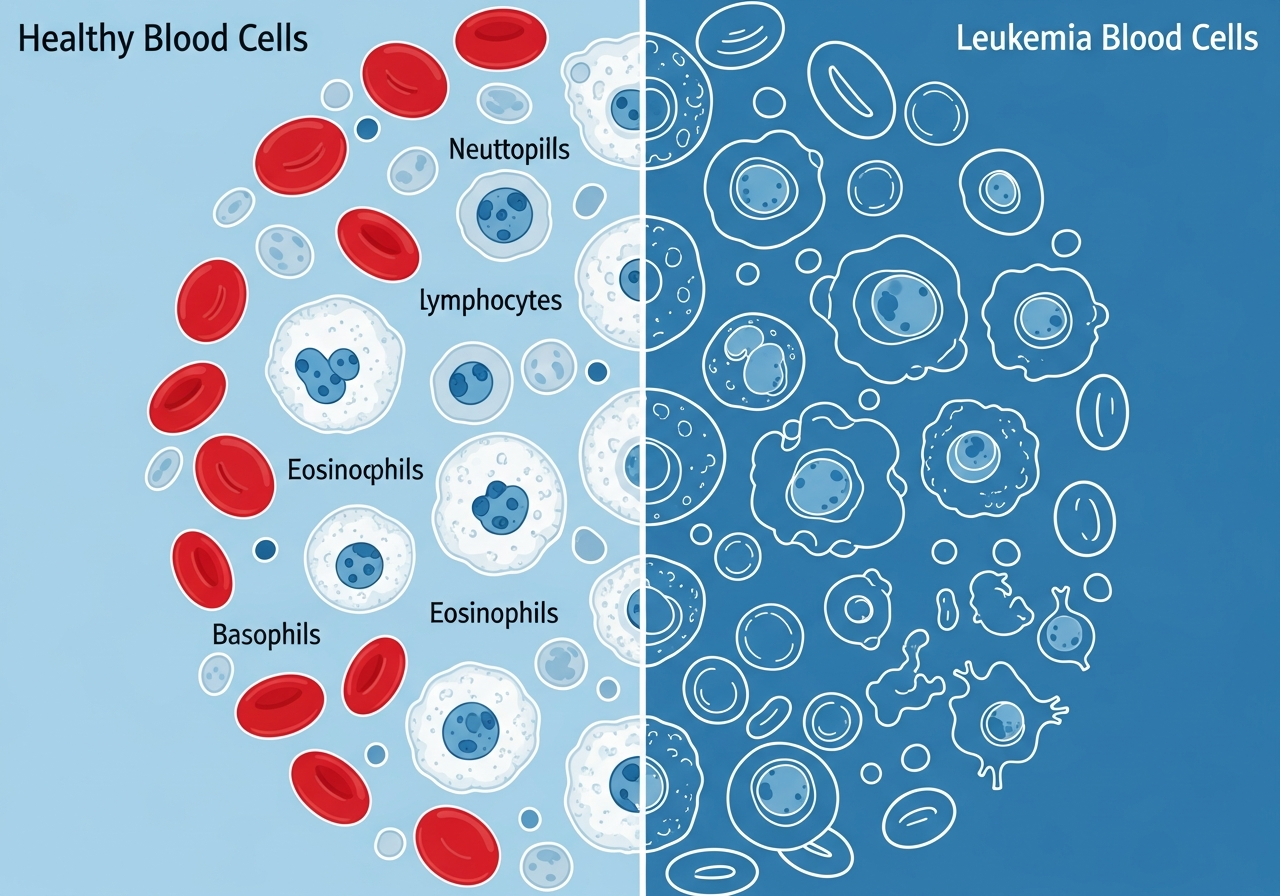
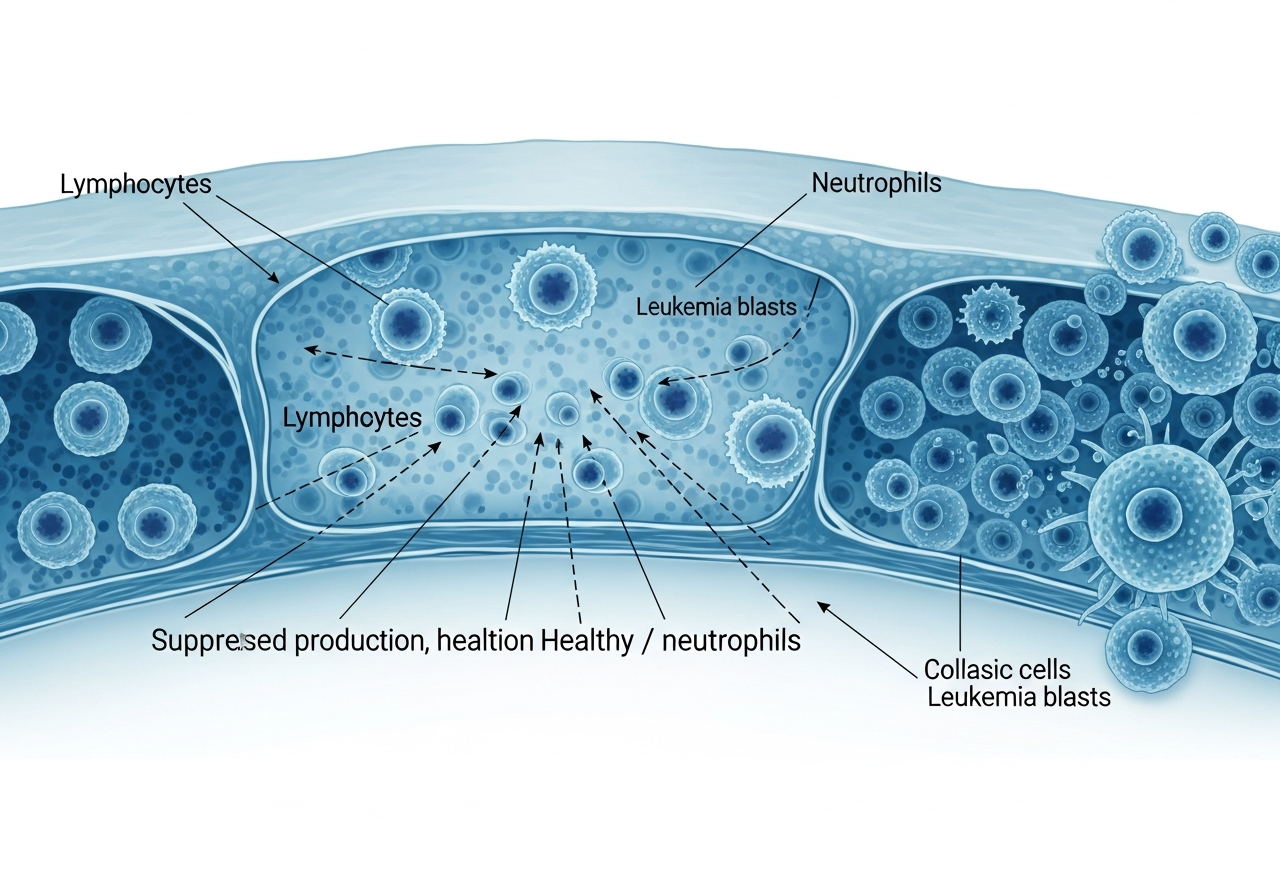
The most direct cause of leukemia-related fatigue is anemia — a deficiency of functional red blood cells. Red blood cells carry hemoglobin, the protein responsible for transporting oxygen from the lungs to every cell in the body. When leukemia cells infiltrate the bone marrow and suppress the production of healthy stem cells, erythropoiesis (red blood cell production) is curtailed. The resulting anemia means tissues throughout the body — including the heart, brain, and skeletal muscles — receive less oxygen than they need to function optimally. The body's physiological response to this oxygen deficit is profound fatigue.
The severity of anemia correlates directly with the severity of fatigue. A patient with a hemoglobin level of 8 g/dL (normal is approximately 12–17 g/dL depending on sex) will experience dramatically more fatigue than one with a level of 10 g/dL. In acute leukemias, where anemia can develop rapidly, fatigue may progress from mild to incapacitating within weeks.
Inflammatory Cytokines
Beyond anemia, the immune system's response to leukemia generates a flood of inflammatory signaling molecules called cytokines — including interleukin-6 (IL-6), tumor necrosis factor (TNF), and interferon-gamma. These cytokines are part of the body's attempt to combat the cancer, but they have a direct side effect: they act on the brain and central nervous system in ways that promote fatigue, sleep disturbance, and what is sometimes called "sickness behavior" — a constellation of lethargy, social withdrawal, and reduced motivation that evolved as a survival mechanism during infection.
Metabolic Competition
Leukemia cells are metabolically demanding. They consume glucose, amino acids, and other nutrients at a high rate, competing with healthy tissues for available energy substrates. This metabolic competition contributes to the overall energy deficit that manifests as fatigue and, in advanced disease, as unexplained weight loss.
Infection-Related Fatigue
Because leukemia compromises immunity, frequent infections are common. Each infection triggers its own inflammatory response and further amplifies fatigue. Patients caught in a cycle of repeated infections — each partially treated before the next begins — may experience continuously worsening fatigue that seems out of proportion to any individual illness.
Recognizing Leukemia-Related Fatigue
Leukemia fatigue has several distinctive clinical characteristics that set it apart from garden-variety tiredness:
- Unresponsive to rest: Sleeping 8–10 hours does not meaningfully improve energy. The fatigue is present immediately upon waking.
- Disproportionate to activity: Tasks requiring minimal physical effort produce exhaustion far beyond what the activity should justify.
- Persistent and progressive: It does not fluctuate week to week with workload or season — it steadily worsens over weeks to months without a clear cause.
- Accompanied by other symptoms: Leukemia fatigue rarely occurs in isolation. It is typically accompanied by at least one of: pallor, breathlessness on exertion, frequent infections, bruising, or unexplained night sweats.
- No obvious trigger: Unlike fatigue from overwork, it is not preceded by a period of unusual physical or mental demand.
Differentiating Leukemia Fatigue from Normal Tiredness
Distinguishing leukemia-related fatigue from the many common causes of tiredness is clinically challenging. The table below provides a comparison of key features:
| Feature | Leukemia Fatigue | Ordinary Tiredness |
|---|---|---|
| Response to rest | Does not improve with sleep | Improves after adequate rest |
| Duration | Persistent weeks to months | Resolves with lifestyle change |
| Associated symptoms | Pallor, infections, bruising | Usually none |
| Blood test | Abnormal CBC (anemia, etc.) | Normal CBC |
| Cause | Anemia, cytokines, infection | Poor sleep, overexertion, stress |
Other medical causes of severe fatigue that must be ruled out include hypothyroidism, iron-deficiency anemia unrelated to leukemia, chronic kidney disease, heart failure, and severe depression. A complete blood count, comprehensive metabolic panel, and thyroid function tests can efficiently screen for most of these conditions.
Diagnostic Relevance
Profound fatigue accompanied by any other leukemia warning sign — particularly pallor, bruising, or recent infections — is a strong indication to order a complete blood count (CBC). The CBC is the cornerstone of leukemia diagnosis and will typically reveal the anemia causing the fatigue, as well as abnormalities in white blood cell and platelet counts that point to bone marrow pathology.
If the CBC is abnormal — particularly if white blood cells are markedly elevated, markedly depressed, or if blast cells are visible on peripheral smear — urgent referral to a hematologist is indicated. A bone marrow biopsy will follow to confirm the diagnosis, determine the specific leukemia subtype, and identify molecular targets for therapy. Results interpretation is covered in our guide to understanding leukemia test results.
Treatment of Leukemia and Its Impact on Fatigue
Leukemia treatment — whether chemotherapy, targeted therapy, or immunotherapy — creates a paradox for fatigue: in the short term, treatment itself causes significant fatigue through bone marrow suppression, nausea, and inflammation. However, as treatment eliminates leukemia cells and allows the bone marrow to recover, anemia resolves and energy levels improve significantly.
During active treatment, red blood cell transfusions are frequently used to manage anemia-related fatigue when hemoglobin falls to critical levels (typically below 7–8 g/dL). Erythropoiesis-stimulating agents (ESAs) may be used in some settings. For patients undergoing stem cell transplantation, the recovery of the transplanted marrow — which typically takes weeks to months — gradually restores normal red blood cell production and resolves the most severe fatigue.
Fatigue Through the Disease Course
In patients who achieve remission, fatigue typically improves substantially over the months following treatment completion. However, cancer-related fatigue (CRF) is recognized as a distinct entity that may persist for months to years after leukemia is in remission — driven by residual inflammation, deconditioning, psychological factors, and sometimes long-term effects of chemotherapy on mitochondrial function. Survivorship programs specifically address CRF, offering evidence-based interventions including graded exercise therapy, cognitive-behavioral therapy, and nutritional support.
Managing Fatigue During Leukemia Treatment
While fatigue during leukemia treatment is largely unavoidable, evidence-based strategies can meaningfully improve quality of life:
- Graded exercise: Even light physical activity — walking 10–20 minutes daily — has strong evidence for reducing cancer-related fatigue and improving mood and sleep quality. Exercise should be introduced gradually under medical supervision.
- Sleep hygiene: Maintaining consistent sleep schedules, limiting caffeine after noon, and creating a restful sleep environment supports whatever restorative sleep is possible during treatment.
- Energy conservation: Prioritizing the most important daily tasks and planning rest periods around activities preserves energy for what matters most. Occupational therapy can help with activity pacing.
- Nutritional support: Adequate protein intake supports muscle maintenance during periods of reduced activity. A registered dietitian experienced in oncology can provide tailored guidance.
- Psychosocial support: Depression and anxiety amplify fatigue significantly. Oncology social workers, therapists, and peer support groups address the psychological dimensions of cancer-related fatigue.
Caregiver Guidance
Caregivers must understand that leukemia fatigue is physiological, not psychological — patients are not simply unmotivated or being overdramatic. Attempting to push a fatigued patient to "push through" is counterproductive and may worsen both the fatigue and the patient's emotional state. Instead, caregivers can help by assuming household tasks, supporting activity at the patient's own pace, and monitoring for signs that fatigue has reached an emergency level — such as breathlessness at rest, chest pain, or confusion, which may indicate severe anemia requiring transfusion.
Caregivers should also track fatigue levels between medical appointments. A simple 0–10 fatigue rating at the same time each day, recorded over a week, gives the clinical team valuable objective information about trajectory and response to treatment.
When to Seek Urgent Care for Fatigue
While fatigue itself is rarely a medical emergency, certain presentations require prompt or emergency evaluation:
- Fatigue severe enough to prevent getting out of bed, accompanied by pallor, requires same-day medical evaluation — this may reflect hemoglobin below transfusion threshold.
- Fatigue accompanied by breathlessness at rest or with minimal activity suggests severe anemia and may require emergency evaluation and transfusion.
- Fatigue with chest pain or palpitations requires emergency evaluation to rule out cardiac complications of severe anemia.
- Sudden severe worsening of fatigue in a patient known to have leukemia — particularly with fever — may indicate infection (sepsis) and requires emergency evaluation.
🚨 When Fatigue Requires Emergency Care
- Breathlessness at rest or with minimal movement
- Chest pain or rapid heartbeat alongside exhaustion
- Sudden, severe worsening with fever — possible sepsis
- Unable to stand or walk safely without assistance
💬 Questions to Ask Your Healthcare Team About Fatigue
- What is my current hemoglobin level, and is it contributing to my fatigue?
- At what hemoglobin level would you recommend a blood transfusion?
- Are there medications or supplements that could help my energy levels?
- Is it safe for me to exercise, and if so, what type and how much?
- Should I see an occupational therapist or dietitian for energy management?
- Is my fatigue likely to improve once treatment is complete?
This content is for informational and educational purposes only. It is not a substitute for professional medical advice, diagnosis, or treatment. Always consult your physician or a qualified healthcare provider with any questions about a medical condition. Never disregard professional medical advice or delay seeking it because of information you have read on this website. Read our full disclaimer.
Frequently Asked Questions
No — fatigue has many causes including poor sleep, stress, thyroid issues, and anemia unrelated to cancer.
Leukemia-related fatigue is profound, does not improve with rest, and accompanies symptoms like pallor or shortness of breath due to anemia.
Yes — as treatment clears cancer cells and restores normal red blood cell production, energy levels typically improve significantly.